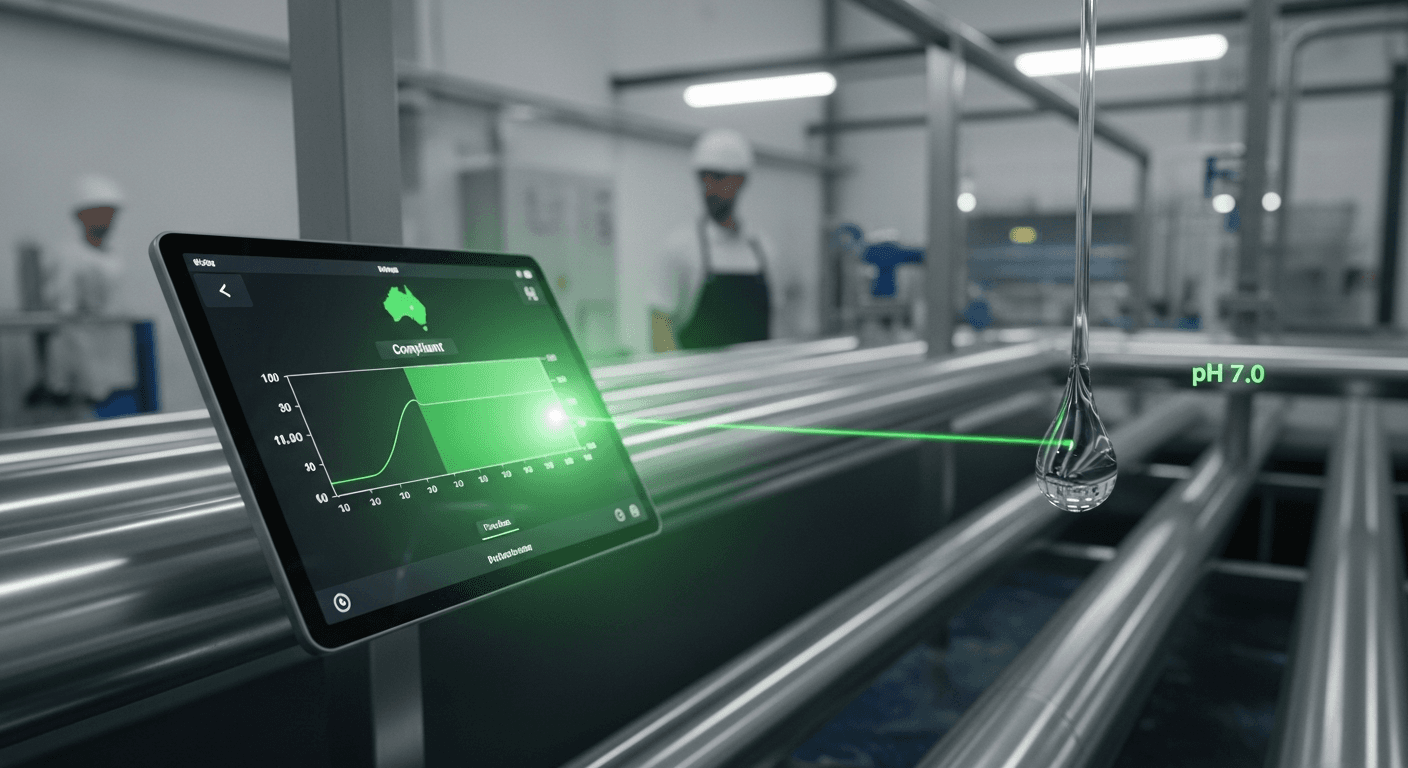
Food manufacturing is a water-intensive process. From initial washdowns to clean-in-place (CIP) cycles, water is a critical utility. However, for Australian food manufacturers, water isn't just an input expense—it is a highly scrutinised, heavily regulated output.
State water authorities (such as Sydney Water, Melbourne Water, and Queensland Urban Utilities) are ramping up monitoring of industrial wastewater. Food factories that discharge effluent containing high levels of organic waste, suspended solids, fats, oils, or extreme pH levels face massive trade waste penalties and risk having their discharge permits suspended.
Managing wastewater compliance is no longer just an environmental concern; it is a direct line item affecting your bottom line. As water tariffs and treatment surcharges rise, operational efficiency in waste management has become a core driver of manufacturing profitability.
Why Food Factories Face High Trade Waste Charges
Wastewater from food processing plants typically carries high biological oxygen demand (BOD) and chemical oxygen demand (COD) due to leftover ingredients, sugar syrup washdowns, and dairy residues.
Water authorities calculate trade waste fees based on three primary factors:
- Volumetric Flow: The total volume of wastewater discharged. Higher volumes place a strain on treatment plants and carry direct volumetric charges.
- Pollutant Loading: The concentration of chemical and organic residues (such as suspended solids, nitrogen, and grease). Exceeding agreed thresholds triggers heavy multipliers.
- pH Levels: Discharging highly acidic or alkaline wastewater (often from cleaning chemicals) that damages municipal sewerage infrastructure. Authorities require pH to be strictly neutralised (typically between 6.0 and 10.0) before discharge.
If a batch goes wrong and is dumped down the drain, or if washdown procedures are poorly controlled, your trade waste bill at the end of the month can spike by tens of thousands of dollars. Furthermore, repeated violations can result in heavy regulatory fines and negative public relations.
How Digital Batch Sheets Reduce Trade Waste Penalties
To control trade waste costs, you must connect what happens on the factory floor with what goes down the drain. A digital batch management system helps you achieve this in three ways:
1. Minimising Batch Failures (Dumped Product)
The most expensive trade waste is finished product dumped due to batching errors. When an operator adds the wrong ingredient or miscalculates a yield, dumping hundreds of liters of product down the drain sends BOD levels through the roof. By implementing digital batch sheets with step-by-step weight validation and lockouts, you eliminate operator errors, ensuring batches are made correctly the first time. No wasted product means no emergency dumps.
2. Standardising Clean-in-Place (CIP) Workflows
Over-using cleaning chemicals or running washdowns longer than necessary wastes water and spikes effluent pH levels. Digital SOPs (Standard Operating Procedures) ensure operators use the exact concentration of sanitiser and the correct water volumes for every clean. This standardisation keeps chemical costs down and prevents extreme pH swings in your effluent tank.
3. Traceability for Water Audits
When water inspectors conduct site audits, having historical digital logs of your production volumes, cleaning cycles, and ingredient waste levels allows you to prove you are operating within your trade waste agreement limits, preventing arbitrary penalty assessments and simplifying compliance reporting.
A Smart Approach to Water Stewardship
Reducing trade waste is part of a broader shift toward water stewardship in Australian manufacturing. By tracking your water-to-product ratio on a batch-by-batch basis, you can identify leaks, optimize your cleaning cycles, and significantly lower your water footprint.
In 2026, sustainable operations are no longer optional. Digitising your water usage and floor controls is a highly effective way to safeguard natural resources while immediately protecting your operational margins from regulatory overheads.