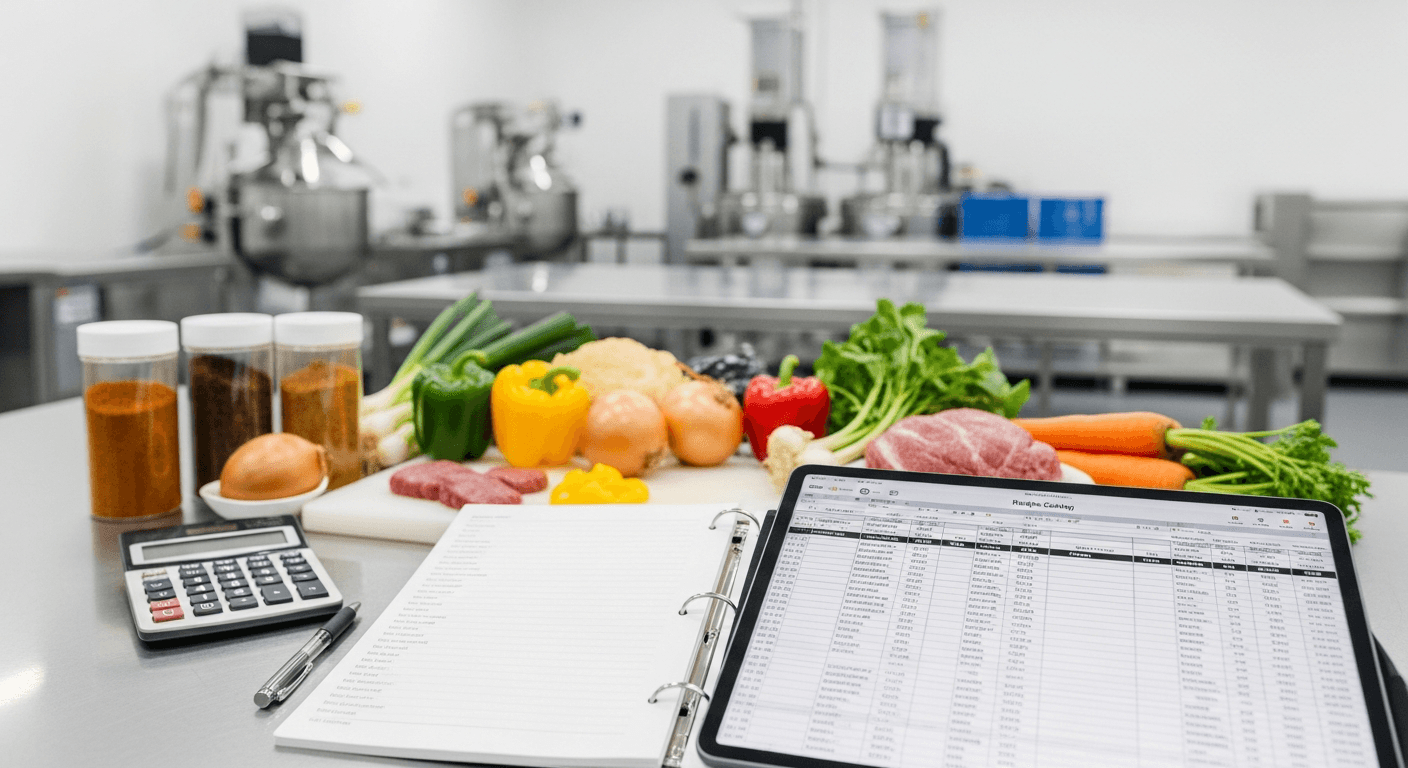
Recipe Costing: Optimizing Food Manufacturing Profit Margins
In the competitive world of food manufacturing, razor-thin margins are the norm. Success hinges on efficiency, precise planning, and, most importantly, a deep understanding of your costs. At the heart of this understanding lies recipe costing. Accurate recipe costing isn’t just about knowing how much your ingredients cost; it's about understanding the true cost of bringing your products to market, empowering you to make informed decisions that drive profitability.
This comprehensive guide will delve into the critical aspects of recipe costing, exploring common pitfalls, effective calculation methods, the role of software, and how to leverage this data to optimize your profit margins. Whether you're a seasoned food manufacturer or just starting out, mastering recipe costing is essential for long-term success.
1. Understanding the Importance of Accurate Recipe Costing
Why is accurate recipe costing so vital? The answer lies in the ability to make informed decisions across your entire operation. Here's a breakdown:
- Pricing Strategy: Knowing your true costs allows you to set competitive yet profitable prices. Underestimating costs can lead to selling products at a loss, while overestimating can price you out of the market.
- Profitability Analysis: Recipe costing provides a clear picture of which products are most profitable, enabling you to focus on those that generate the highest returns. This also allows you to identify products that are underperforming and need re-evaluation.
- Inventory Management: Accurate cost data helps optimize inventory levels, reducing waste and minimizing holding costs. By knowing the cost of each ingredient in your recipes, you can better predict demand and avoid overstocking or stockouts.
- Negotiating Power: Detailed cost breakdowns provide leverage when negotiating with suppliers. Armed with data on ingredient costs, you can negotiate better prices and improve your bottom line.
- Recipe Optimization: Recipe costing can reveal opportunities to reduce costs by substituting ingredients or streamlining processes without compromising quality. For example, you might find that using a different supplier for a specific spice significantly lowers your cost without affecting the final product's taste.
- Compliance and Traceability: Accurate records are crucial for regulatory compliance and traceability. In the event of a recall, you need to be able to quickly identify the source of ingredients and the cost associated with the affected products.
2. Common Recipe Costing Mistakes to Avoid
Even with the best intentions, mistakes can creep into your recipe costing process. Here are some common pitfalls to watch out for:
- Ignoring Shrinkage and Waste: Ingredients are often lost due to spoilage, spillage, or preparation waste. Failing to account for this can significantly underestimate your true costs. Always factor in a realistic percentage for shrinkage and waste based on your historical data.
- Using Outdated Prices: Ingredient prices fluctuate. Relying on outdated price lists can lead to inaccurate calculations. Implement a system for regularly updating your ingredient costs, ideally through integration with your supplier's pricing data. Batchbase can help with this through supplier management features. Check out Batchbase features
- Neglecting Labor Costs: The labor involved in preparing a recipe is a significant expense. Failing to include labor costs in your calculations can severely underestimate your true costs. Track the time spent on each recipe and allocate labor costs accordingly.
- Overlooking Overhead Expenses: Overhead costs, such as rent, utilities, and equipment depreciation, must be factored into your recipe costing. These costs are often overlooked but can significantly impact your profitability. Allocate overhead costs based on a reasonable metric, such as production volume or square footage.
- Inconsistent Units of Measure: Using different units of measure for ingredients can lead to errors. Ensure that all ingredients are measured in the same units (e.g., pounds, kilograms, ounces) throughout the costing process.
- Not Factoring in Packaging Costs: Packaging is a significant cost component, especially for retail products. Don't forget to include the cost of containers, labels, and any other packaging materials.
3. Methods for Calculating Recipe Costs (with Examples)
Several methods can be used for recipe costing, ranging from simple spreadsheets to sophisticated software solutions. Here are a few common approaches:
3.1. Manual Calculation (Spreadsheet Method)
This is the simplest method, suitable for small-scale operations with a limited number of recipes. It involves creating a spreadsheet with columns for each ingredient, the quantity required, the unit price, and the extended cost (quantity x unit price). The total recipe cost is the sum of the extended costs for all ingredients.
Example:
Let's say you're making a batch of cookies. Your recipe calls for:
- 2 lbs Flour @ $1.00/lb = $2.00
- 1 lb Sugar @ $0.75/lb = $0.75
- 0.5 lb Butter @ $2.00/lb = $1.00
- 2 Eggs @ $0.50/egg = $1.00
- 1 tsp Vanilla Extract @ $0.25/tsp = $0.25
Total Ingredient Cost = $2.00 + $0.75 + $1.00 + $1.00 + $0.25 = $5.00
If this recipe yields 24 cookies, the cost per cookie is $5.00 / 24 = $0.21.
3.2. Bill of Materials (BOM) Method
This method is more structured and suitable for larger operations. A Bill of Materials (BOM) is a comprehensive list of all the raw materials, components, and instructions required to manufacture a product. Each item in the BOM is assigned a cost, and the total cost is calculated by summing the costs of all items.
Example:
Consider a pre-made lasagna. The BOM would include:
- Lasagna Noodles
- Ground Beef
- Tomato Sauce
- Ricotta Cheese
- Mozzarella Cheese
- Parmesan Cheese
- Spices
Each ingredient would have a specified quantity and unit cost. The BOM would also include instructions for assembling the lasagna, which can be used to estimate labor costs.
3.3. Standard Costing
This method involves setting predetermined standard costs for ingredients and labor. These standard costs are based on historical data or anticipated future prices. While simpler to implement, standard costing can be less accurate than actual costing, especially in volatile markets.
Example:
You might set a standard cost of $1.50 per pound for sugar, even if the actual price fluctuates slightly. This simplifies recipe costing but may not reflect the true cost if the price of sugar rises significantly.
4. The Role of Software in Streamlining Recipe Costing
Manual recipe costing can be time-consuming, error-prone, and difficult to scale. Food manufacturing software like Batchbase automates the process, providing accurate and up-to-date cost information in real-time.
Here are some benefits of using software for recipe costing:
- Automation: Software automates the calculation process, eliminating manual errors and saving time.
- Real-time Updates: Software can integrate with supplier pricing data to automatically update ingredient costs, ensuring accuracy.
- Inventory Management Integration: Software can track inventory levels and automatically adjust costs based on usage.
- Reporting and Analytics: Software provides detailed reports and analytics on recipe costing, allowing you to identify cost-saving opportunities.
- Scalability: Software can easily handle a large number of recipes and ingredients, making it suitable for growing businesses.
- Traceability: Track lot codes and ingredient origins for improved traceability and compliance.
Batchbase offers a comprehensive recipe costing module that streamlines the entire process, from ingredient tracking to cost analysis. Learn more about Batchbase
5. Beyond Ingredients: Factoring in Labor and Overhead
While ingredient costs are a major component of recipe costing, it's crucial to factor in labor and overhead expenses to get a complete picture of your true costs.
5.1. Labor Costs
Track the time spent on each recipe and allocate labor costs accordingly. This can be done using time tracking software or by estimating the time required for each step in the process. Be sure to include wages, benefits, and payroll taxes.
Example:
If it takes 1 hour of labor at a rate of $20 per hour to produce a batch of cookies, the labor cost per batch is $20. If the batch yields 24 cookies, the labor cost per cookie is $20 / 24 = $0.83.
5.2. Overhead Costs
Overhead costs include rent, utilities, equipment depreciation, insurance, and other indirect expenses. Allocate these costs to your recipes based on a reasonable metric, such as production volume, square footage, or machine hours.
Example:
If your total overhead costs are $10,000 per month and you produce 10,000 units of product, you could allocate $1 of overhead cost to each unit. This can be further broken down by recipe based on the percentage of total production volume each recipe represents.
6. Using Recipe Costing Data to Improve Profitability
Once you have accurate recipe costing data, you can use it to improve your profitability in several ways:
- Identify High-Cost Ingredients: Pinpoint ingredients that are driving up your costs and explore alternatives. Could you source a similar ingredient from a different supplier at a lower price? Or could you reformulate the recipe to reduce the quantity of the expensive ingredient?
- Optimize Recipes: Analyze your recipes to identify opportunities to reduce waste, streamline processes, and improve efficiency. Can you simplify the preparation process to reduce labor costs? Or can you use a different cooking method to reduce energy consumption?
- Negotiate with Suppliers: Use your cost data to negotiate better prices with your suppliers. Show them that you're aware of the market prices and that you're looking for the best possible deal.
- Adjust Pricing: Use your cost data to set competitive yet profitable prices for your products. Consider using a cost-plus pricing strategy, where you add a markup to your total costs to determine the selling price.
- Focus on Profitable Products: Identify your most profitable products and focus your resources on promoting and selling them. Consider discontinuing or re-evaluating products that are consistently unprofitable.
- Monitor Performance: Regularly monitor your recipe costing data to track performance and identify trends. Are your costs increasing or decreasing over time? Are you meeting your profitability targets? Use this data to make informed decisions and continuously improve your operations.
By mastering recipe costing, you can gain a competitive edge in the food manufacturing industry, improve your profitability, and ensure the long-term success of your business. Accurate recipe costing is the foundation for informed decision-making, enabling you to optimize your operations and achieve sustainable growth. Embrace the power of data and unlock the full potential of your food manufacturing business.