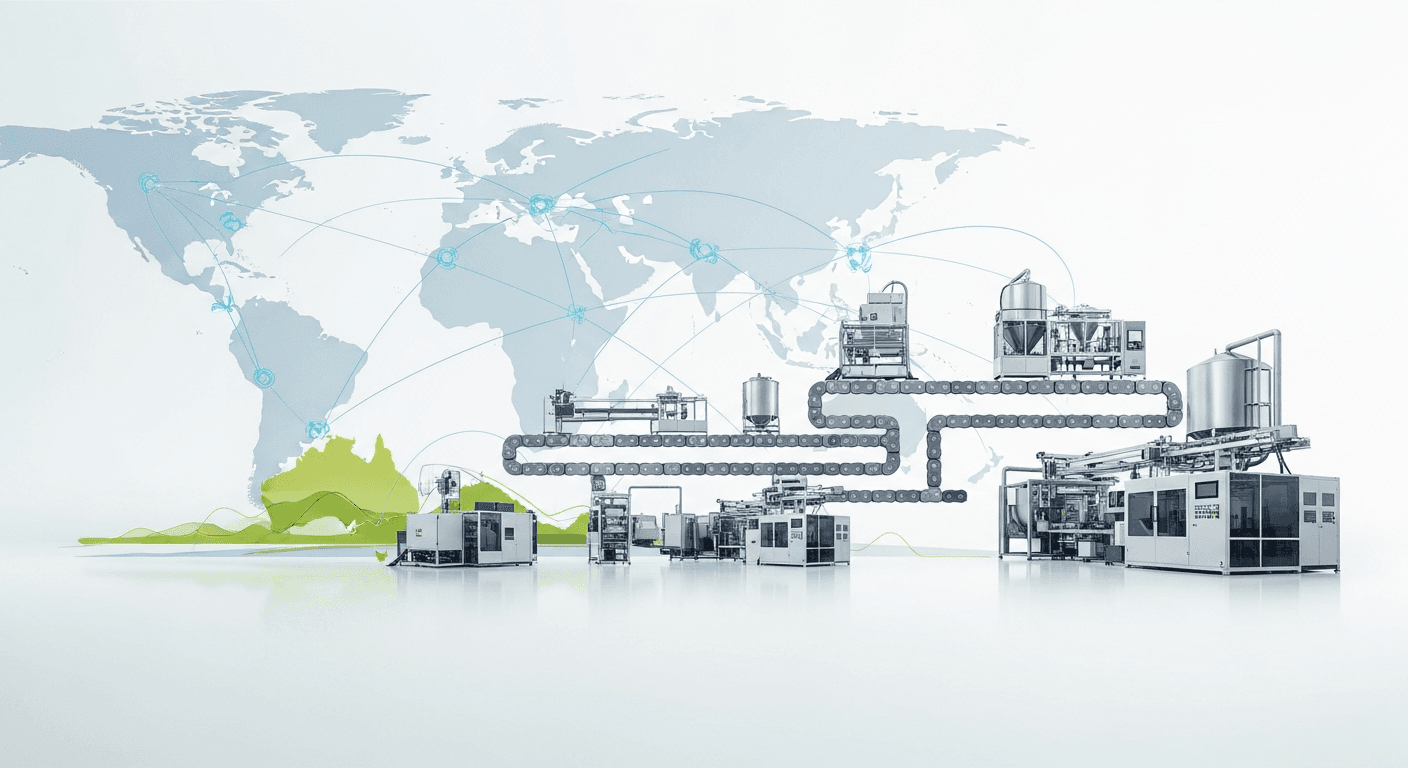
Supply Chain Agility: Sourcing Strategies for Australian Manufacturers in Q2 2026 and Beyond
For decades, the golden rule of food manufacturing was "just-in-time" production. The primary goal was to keep inventory lean, minimize warehouse footprints, and keep storage costs exceptionally low. But as we move deeper into 2026, that highly optimized model has become a massive operational liability. Between erratic climate events impacting local agriculture, shifting global trade policies, and unpredictable freight routes, a rigid supply chain is a direct threat to your bottom line. Today, successful Australian B2B food producers are pivoting to a "just-in-case" strategy—and they need the right digital tools to make it work.
The 2026 Commodity Rollercoaster
If you look at the macro-agricultural outlook for Q2 and the rest of the year, the only constant is uneven supply. According to recent market outlooks, the global soybean market is tightening significantly, and the corn market is bracing for a sharp deficit of around 39 million tonnes globally. Meanwhile, crucial flavor ingredients like coffee and cocoa are experiencing intense volatility,(https://www.rfdtv.com/coffee-cocoa-prices-slide-as-global-supplies-expand).
Closer to home, Australian food and beverage companies operate within highly complex and interdependent supply chains. We saw the risks of this recently when severe flooding in Queensland severely affected Australia's banana crop. For an operations manager, relying on a single-source supplier for key ingredients—whether sourced locally or imported—is incredibly risky.
Geopolitical Chokepoints and Freight Volatility
Even if crop yields are strong at their origin, getting the raw materials to Australian shores is another challenge entirely. Ongoing(https://www.marex.com/news/2026/03/agriculture-commodities-outlook-gulf-tensions/) are profoundly reshaping global shipping flows. While some containerized freight rates may be temporarily locked in, manufacturers are still feeling the indirect squeeze of rising bunker fuel prices, extended voyage times, and spiking insurance premiums. This kind of volatility demands real-time transparency to anticipate disruptions and quickly source alternative local suppliers before a crisis halts the factory floor.
Agility Requires the Right Software
When a global shortage or freight delay forces a sudden pivot to a new ingredient, you cannot afford to halt the production line for days while your team manually recalculates recipes. This is exactly where modern food manufacturing software proves its worth.
To maintain true agility, businesses need a centralized Product & Ingredient Hub. A specialized platform like Batchbase acts as your single source of truth, allowing you to instantly swap raw materials without losing track of your margins. Batchbase provides real-time food and beverage cost control, automatically updating your true costs across the board as supplier prices and freight fees fluctuate.
Crucially, pivoting to a new supplier means you must instantly re-vet the ingredient for regulatory compliance. You cannot let a quick supply chain fix result in an allergen cross-contamination disaster. A defensible allergen control program is an absolute necessity. Batchbase utilizes AI to pull verified data directly from the(https://batchbase.com.au/features), ensuring that any new ingredient swap automatically detects new allergens and triggers an updated, perfectly accurate Nutrition Information Panel (NIP) and Country of Origin Label (CoOL).
By moving away from static spreadsheets and embracing an agile, centralized digital infrastructure, you can confidently navigate the sourcing challenges of 2026. Your supply chain might be unpredictable, but with the right systems in place, your production floor doesn't have to be.