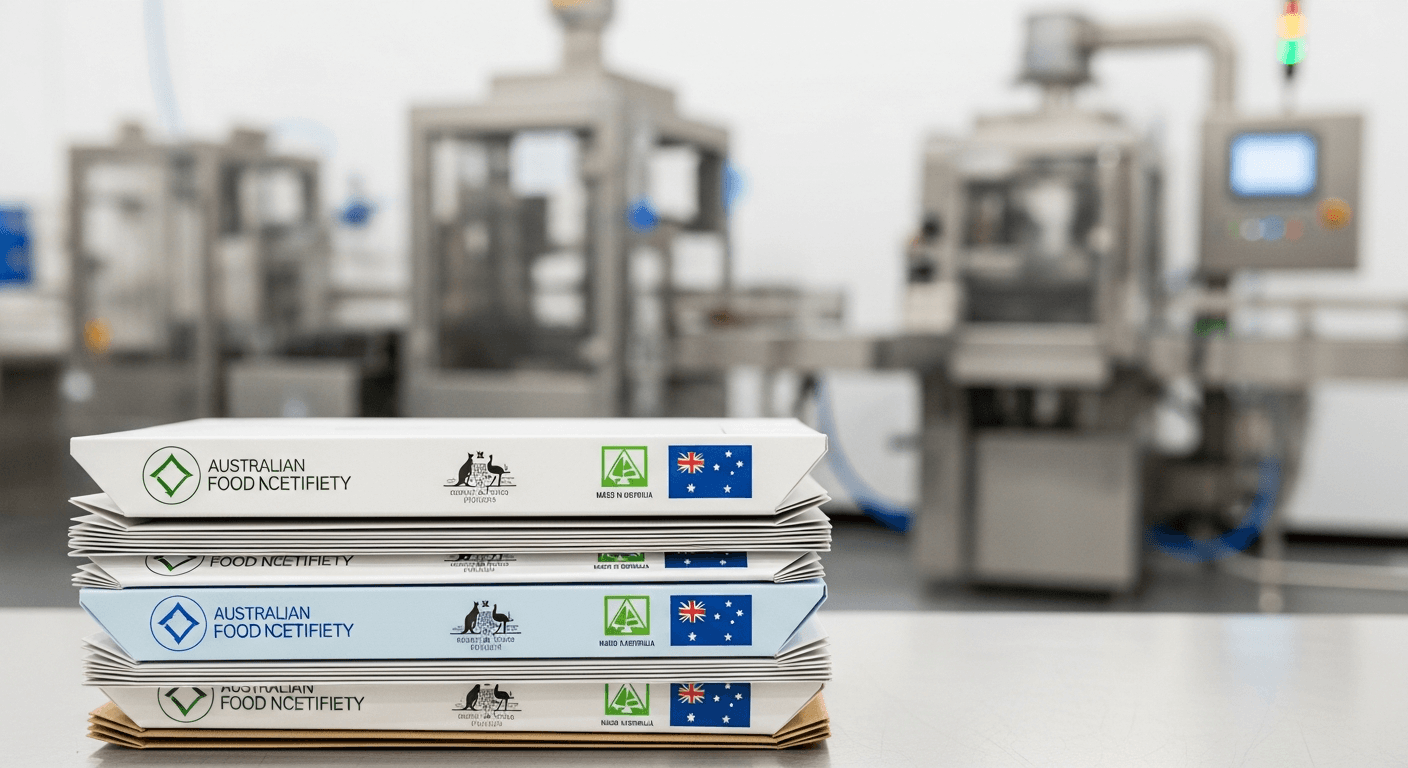
The Sustainable Shift: Australia's 2026 Packaging Regulations and Production Realities
For modern food and beverage operations, sustainability has officially transitioned from a voluntary initiative to a strict legal mandate. Driven by consumer demand and tightening Australian regulations, food brands are abandoning single-use plastics for compostable and recyclable alternatives. While this is a massive win for the environment, it introduces profound operational challenges on the factory floor in 2026.
Mandatory Packaging Targets in Australia
The regulatory landscape is shifting rapidly. Under new frameworks rolling out from 2026, the Australian National Packaging Targets are becoming enforceable. This means businesses must pivot toward the goal of 100% of packaging being recyclable, reusable, or compostable. Furthermore, states are taking aggressive individual action; for instance, from March 1, 2026, South Australia requires that every certified compostable food container be clearly labelled with its specific compostability type.
To avoid non-compliance, mandatory data reporting is taking centre stage. Manufacturers must possess reliable digital systems to track custom packaging variables—including material composition and exact recovery rates—with the same rigour applied to food ingredients.
The Physics of Biopolymers on the Production Line
The physical transition to sustainable alternatives like bio-coated boards introduces massive thermodynamic challenges in industrial packaging machinery. Unlike forgiving petroleum-based plastics, biopolymers possess drastically different thermodynamic properties.
Sustainable materials have incredibly narrow sealing windows. If temperatures exceed extremely precise bands, the material can melt or warp unpredictably. To avoid burning delicate biopolymers, manufacturers often must lower the heat and increase the dwell time. Extending dwell times inherently slows down line speeds, reducing overall throughput.
Managing the Transition with Modern Software
Navigating this complex reality is fundamentally a data management challenge. You cannot manage advanced biopolymer thermodynamics and strict Australian packaging reporting using scattered spreadsheets. This is why adopting specialised food manufacturing software is the primary differentiator for successful operations in 2026.
By utilising a comprehensive platform like(https://batchbase.com.au/), a facility manager can maintain a deeply structured packaging database, logging new sealing temperature parameters as part of strict version control. Batchbase also allows you to export PIF-Style documents detailing packaging data for compliance. The future of Australian food manufacturing belongs to those who can package products sustainably without sacrificing their margins.