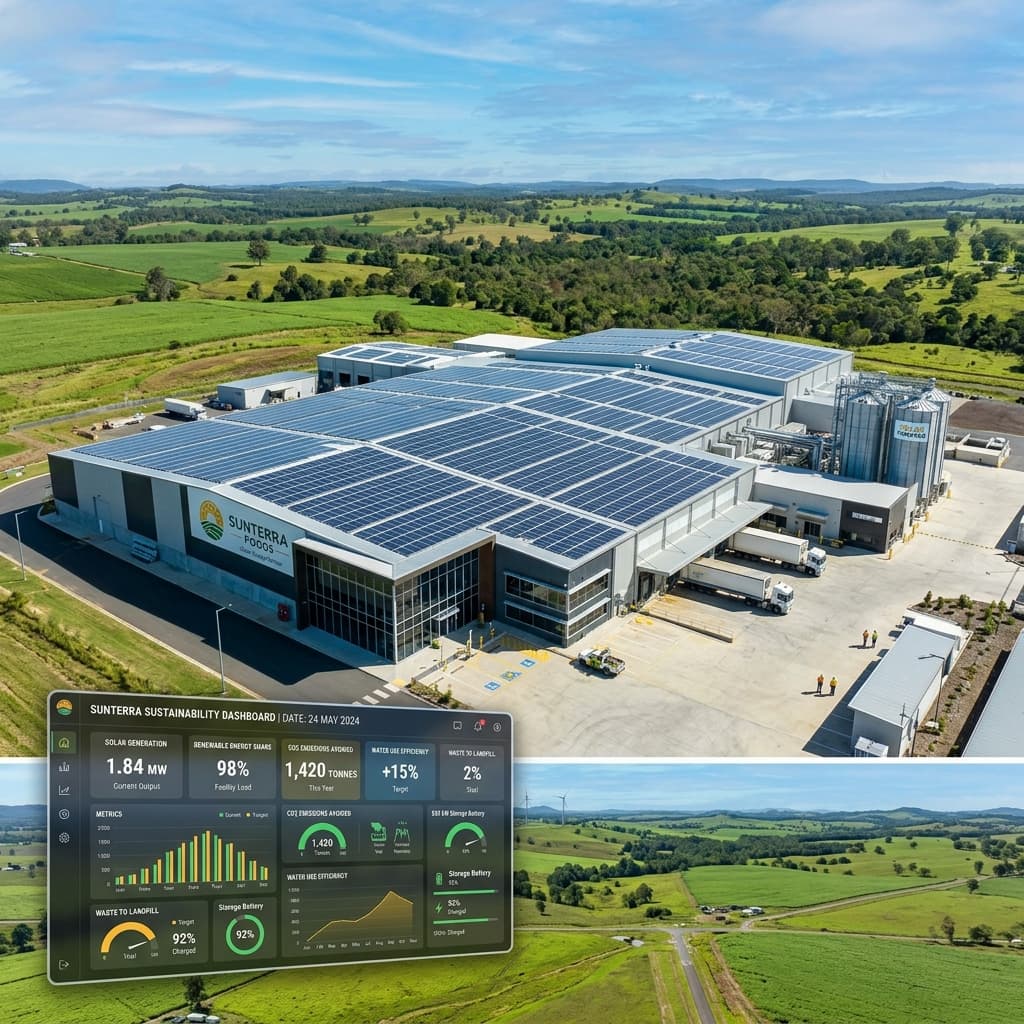
Sustainability reporting across Australia has entered an era of strict statutory enforcement. Under the Australian Accounting Standards Board's AASB S2 (Climate-related Disclosures) framework and mandatory reporting legislation passed by the Federal Parliament, Australian businesses must disclose their climate risks and carbon emissions profiles.
For Australian food and beverage processors, the most significant impact of this legislation is not direct factory emissions—it is Scope 3 Supply Chain Carbon Accounting.
According to climate data published by the Clean Energy Regulator (CER), over 70% to 85% of a food manufacturer's total carbon footprint lies within Scope 3—originating from raw agricultural ingredient sourcing, packaging production, third-party cold-chain freight, and post-consumer waste management.
Furthermore, major supermarket retailers like Coles and Woolworths have set aggressive Scope 3 reduction targets for 2030. They are increasingly requiring commercial food suppliers to submit verifiable Life Cycle Assessment (LCA) data and carbon intensity metrics per kilogram of finished SKU.
Understanding Emission Scopes in Food Manufacturing
To execute accurate carbon accounting, plant managers must categorize emissions across three distinct operational boundaries:
- Scope 1 (Direct Emissions): Onsite combustion of natural gas in steam boilers, diesel usage in company forklifts, and fugitive refrigerant gas leaks from industrial ammonia or HFC chillers.
- Scope 2 (Indirect Energy Emissions): Purchased electricity consumed on the factory floor to power air compressors, processing machinery, conveyors, and facility lighting.
- Scope 3 (Upstream & Downstream Value Chain Emissions): Embedded carbon within purchased raw ingredients (fertilizers, livestock methane, crop cultivation), packaging manufacturing, third-party logistics freight, trade waste treatment, and end-of-life product disposal.
Carbon Intensity Benchmarks Across Australian Food Processing Sectors
| Food Processing Sector | Primary Scope 1 & 2 Drivers | Primary Scope 3 Hotspots | Benchmark Carbon Intensity (kg CO₂e / kg SKU) | Primary Decarbonization Strategy |
|---|---|---|---|---|
| Meat & Protein Processing | Refrigeration power, washdown hot water | Livestock enteric fermentation, feed transport | 12.0 – 28.0 kg CO₂e / kg | Regenerative agricultural sourcing & onsite heat recovery |
| Dairy Processing (Milk/Cheese) | Thermal pasteurization, spray drying | Farmgate milk production, feed nitrogen | 2.5 – 6.5 kg CO₂e / kg | Solar PV, heat pumps & farmgate carbon offsets |
| Commercial Bakery & Snacks | Natural gas baking ovens, chilling lines | Wheat/grain cultivation, palm/canola oil | 0.8 – 2.2 kg CO₂e / kg | Electric oven retrofits & sustainable ingredient sourcing |
| Beverage & Liquid Foods | Thermal sterilization, bottle washing | Glass/aluminum packaging, freight logistics | 0.4 – 1.5 kg CO₂e / kg | Lightweight mono-packaging & fleet electrification |
4 Practical Strategies to Decarbonize Food Processing Operations
To meet retailer Scope 3 mandates and comply with AASB S2 disclosures without inflating production costs, food manufacturing leadership should implement four practical operational initiatives:
1. Onsite Heat Recovery & Thermal Electrification (Scope 1 & 2)
In thermal food processing (pasteurization, blanching, cooking), steam boilers consume immense quantities of natural gas. Installing high-temperature industrial heat pumps powered by onsite rooftop solar arrays enables plants to replace gas boilers for low-temperature heating operations (up to 90°C), drastically reducing Scope 1 gas emissions.
Additionally, capturing waste heat rejected from industrial refrigeration compressors to pre-heat boiler feedwater delivers immediate gas savings.
2. Transitioning to Low-Carbon & Regenerative Raw Materials (Scope 3)
Because raw agricultural inputs dominate Scope 3 emissions, food procurement teams must work directly with ingredient suppliers. Sourcing grains, oilseeds, or dairy from farms utilizing precision fertilizer application, cover cropping, and rotational grazing lowers the embedded carbon footprint of your raw materials.
Storing supplier carbon intensity scores alongside raw material technical specs ensures R&D teams consider carbon impact during formula optimization.
3. Optimizing Yield and Reducing Factory Waste
Physical mass loss on the factory floor is an overlooked carbon liability. When raw ingredients are spilled, over-filled, or scrapped due to processing errors, all the embedded Scope 3 carbon within those ingredients is wasted.
By utilizing dedicated systems like Batchbase Yield Tracking and Spec Management, floor operators track raw material yield in real time, eliminating avoidable process shrinkage that inflates product carbon intensity.
4. Streamlining Logistics & Freight Transport
Third-party refrigerated transport is a major Scope 3 contributor. Optimizing pallet stacking configurations, increasing vehicle fill rates, and utilizing local regional logistics hubs reduces overall tonne-kilometer freight emissions.
Integrating Carbon Metrics into Product Costing & Spec Sheets
Historically, food manufacturers treated carbon accounting as an annual retrospective ESG exercise managed by external consultants.
In 2026, progressive food plants are integrating carbon intensity metrics (kg CO₂e per unit) directly into their operational Product Information Forms (PIFs) and Bill of Materials (BOM) costing systems.
When R&D teams evaluate formula changes—such as replacing imported sunflower oil with locally sourced canola oil—they instantly view both the financial cost impact and the carbon reduction impact side-by-side.
This level of operational visibility is powered by unified data platforms. Systems like Batchbase give food manufacturers the infrastructure needed to log raw material specs, track batch yields, and satisfy strict retailer reporting demands.
Conclusion: Winning Retailer Contracts Through Decarbonization Leadership
Scope 3 carbon accounting is rapidly transforming from a regulatory reporting burden into a key commercial differentiator for Australian food manufacturers. Supermarket buyers are prioritizing suppliers who present clear, verifiable carbon reduction data alongside competitive pricing.
By implementing heat recovery retrofits, optimizing raw material yield, digitizing spec sheet carbon scores, and actively managing supply chain emissions, Australian food plants can secure long-term retailer contracts while advancing corporate Net Zero goals.
Ready to digitize your factory's spec management and yield tracking? Request a live Batchbase demo today.