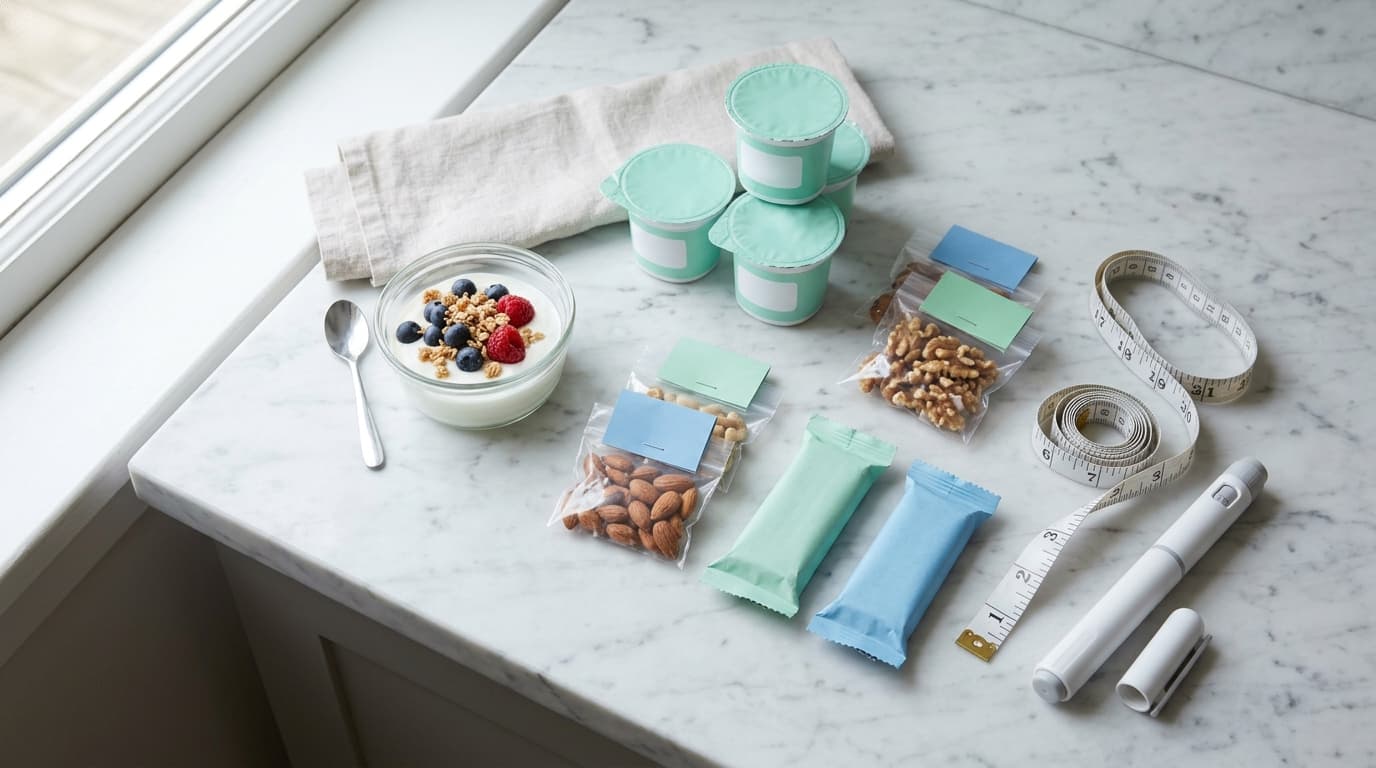
Weight-loss medications such as Ozempic, Wegovy and Mounjaro started as a pharmaceutical story. In 2026 they are a food industry story. Research from UNSW Sydney estimates that around 500,000 Australians were using GLP-1 receptor agonist medications each month by early 2025, and a growing share are paying privately rather than through the PBS.
These drugs work by suppressing appetite and slowing digestion. Users eat less, feel full sooner and, according to a growing body of research, change what they buy as well as how much. For Australian food manufacturers, that creates risk in some categories and real opportunity in others.
This article summarises what the data says so far, which categories are most exposed, and how to adapt your product portfolio, pack formats and nutrition profile.
The Numbers: How Many People, and How Much Less They Buy
| Indicator | Figure | Source |
|---|---|---|
| Australians using GLP-1 medications per month (early 2025) | ~500,000 | UNSW Sydney research |
| Share of estimated use accessed privately (outside the PBS) | ~44% | UNSW Sydney research |
| Fall in household grocery spending within 6 months of starting a GLP-1 | ~5.3% | Cornell University (US scanner data) |
| Fall in grocery spending among higher-income households | 8%+ | Cornell University |
| Fall in spending on fast food and limited-service outlets | ~8% | Cornell University |
| Fall in spending on calorie-dense snacks such as chips and sweet bakery | ~10% or more | Cornell University |
The Cornell research, led by Sylvia Hristakeva and Jura Liaukonyte, linked household purchase data with survey responses on GLP-1 use. Their key finding is that spending reductions persist for as long as people stay on the medication, and largely reverse if they stop. That makes this a structural shift tied to adoption rates, not a passing diet fad.
Australian purchase data at this level of detail is still limited, but the direction is consistent with what local retailers and food scientists are reporting. Adoption is also likely to grow as supply improves and prices fall.
Which Categories Are Most Exposed?
GLP-1 users report reduced cravings, particularly for foods high in fat, sugar and salt. They also eat smaller portions and are more likely to skip snacks between meals. The impact is uneven across the supermarket.
| Category | Likely direction | Why |
|---|---|---|
| Savoury snacks, chips, crackers | ↓ Strong decline | Reduced cravings and fewer between-meal eating occasions |
| Confectionery and chocolate | ↓ Strong decline | Lower desire for sweet, energy-dense foods |
| Sweet biscuits and bakery | ↓ Decline | Impulse purchases fall and portion tolerance shrinks |
| Sugary soft drinks | ↓ Decline | Users report preference for water and lighter drinks |
| Ready meals (standard size) | ↔ / ↓ Mixed | Convenience still valued, but large portions go to waste |
| Yoghurt, especially high-protein | ↑ Growth | Protein-dense, easy to eat in small amounts |
| Fresh produce, lean protein | ↑ Growth | Shift toward nutrient-dense whole foods |
| Protein bars, shakes and fortified foods | ↑ Growth | Helps users meet protein targets and avoid muscle loss |
| High-fibre products | ↑ Growth | Supports digestive comfort, a common concern for users |
The Nutrition Problem GLP-1 Users Need Solved
When people eat significantly less, every bite has to work harder. Clinicians and dietitians have raised concerns about muscle loss, protein shortfalls and micronutrient deficiencies in people on GLP-1 medications. Common side effects such as nausea and digestive discomfort also make large, rich or greasy meals less appealing.
That gives food manufacturers a clear brief. Products that succeed with this group tend to be:
- Nutrient-dense, not energy-dense. High protein, fibre and micronutrients per serve, in fewer kilojoules.
- Smaller and portion-controlled. Single-serve, mini and resealable formats that reduce waste.
- Gentle on the stomach. Lower fat, moderate flavour intensity and easy textures.
- Clearly labelled. Protein per serve and fibre content called out clearly and legally on pack.
Many of these attributes overlap with trends we explored in the functional food boom. GLP-1 adoption accelerates them.
Five Practical Moves for Australian Manufacturers
1. Rethink portion and pack architecture
Smaller formats are the most direct response. A 40g snack pack, a 120g yoghurt pot or a single-serve ready meal suits someone who feels full after a few bites. Be careful, though: reducing pack size while holding price is now under intense scrutiny. If you introduce smaller formats, make it a clearly new product rather than a quiet downsize. Our article on shrinkflation and unit pricing reform explains the risks.
2. Increase protein and fibre density
Reformulating to add protein (dairy proteins, legumes, pulses or plant protein isolates) or fibre (oats, inulin, resistant starch) can reposition an existing product. Every change affects your NIP, allergen declarations and costings, so model it properly before a trial run.
3. Make claims carefully
In Australia, nutrition content claims like "high protein" or "good source of fibre" must meet the conditions in Standard 1.2.7 of the Food Standards Code. Avoid implying your product is designed for, or interacts with, a prescription medicine. Health claims tied to medications or medical conditions carry significant regulatory risk.
4. Watch your Health Star Rating
Products reformulated for nutrient density often score better on the Health Star Rating, which is increasingly important as the government moves toward mandatory HSR. See our HSR regulatory timeline for what is coming.
5. Stress-test your volume forecasts
If a large share of your revenue comes from impulse snacks or indulgent bakery, model what a 5% to 10% volume decline in that range would do to your plant utilisation and overhead recovery. Lower volumes spread fixed costs across fewer units, which pushes up cost per unit even if ingredient prices stay flat.
Scenario: What a 5% Volume Drop Does to Unit Cost
| Snack line (annual) | Current | With 5% volume decline |
|---|---|---|
| Units produced | 4,000,000 | 3,800,000 |
| Variable cost per unit | $0.42 | $0.42 |
| Fixed overhead allocated to line | $600,000 | $600,000 |
| Overhead per unit | $0.150 | $0.158 |
| Total cost per unit | $0.570 | $0.578 |
| Gross profit at $0.80 wholesale | $920,000 | $844,000 (–8.3%) |
A modest volume decline reduces gross profit by more than the volume loss itself, because fixed costs don't shrink. This is why understanding your true cost per unit at different volumes matters.
Is This a Threat or an Opportunity?
Both. Manufacturers built around high-volume, indulgent snacking face genuine headwinds as adoption grows. But GLP-1 users are not leaving the supermarket. They are redirecting spending toward foods that fit how they now eat. Brands that offer smaller, more nutritious, better-labelled products are well placed to capture that spend.
The broader population is moving the same way. Interest in protein, fibre and portion control is growing well beyond medication users, which means products designed for GLP-1 consumers often appeal to health-conscious shoppers in general.
How Retailers Are Likely to Respond
Supermarkets watch basket data closely, and they will respond to shifting demand before most manufacturers do. Based on international experience and current Australian range trends, expect:
- More shelf space for protein and "better for you" ranges. High-protein yoghurt, ready-to-drink protein and fortified snacks have been some of the fastest-growing chilled and ambient segments globally.
- Tougher range reviews for slow-moving indulgent lines. If a product's rate of sale slips, it becomes vulnerable at the next review, regardless of brand history.
- Growth in private label "smart portion" and protein products. Retailers move quickly to capture emerging trends with their own brands, which increases competition for branded suppliers.
- Requests for nutrition data. Category managers will increasingly ask suppliers for protein, fibre and HSR data to support range and promotional planning.
Suppliers who arrive at range reviews with a clear plan, such as a smaller format, a protein-boosted variant or improved HSR, are in a much stronger position than those defending the status quo.
A 90-Day Action Plan
| Timeframe | Action | Output |
|---|---|---|
| Weeks 1–2 | Classify every SKU as exposed, neutral or opportunity | Portfolio heat map |
| Weeks 3–4 | Model 5% and 10% volume declines on exposed lines | Revised cost per unit and margin by product |
| Weeks 5–8 | Develop two or three reformulation or smaller-format concepts | Draft recipes, NIPs, HSR and costings |
| Weeks 9–10 | Run small production trials and sensory testing | Trial results and shelf-life data |
| Weeks 11–12 | Prepare retailer presentation with data | Range review pitch backed by evidence |
Frequently Asked Questions
Can I market a product as "GLP-1 friendly" in Australia?
Proceed with great caution. Linking a food to a prescription medicine or a medical condition can amount to a health claim or therapeutic claim. Focus instead on compliant nutrition content claims like "high protein" or "source of fibre", and seek regulatory advice before using medication-related language.
Will GLP-1 use keep growing in Australia?
Most analysts expect it to, as supply constraints ease, more products reach the market and prices come down. PBS listing decisions for weight management indications will also influence adoption.
Do I need to reformulate my whole range?
No. Start by identifying the products most exposed (impulse, indulgent, large-portion) and the products best placed to benefit (protein-rich, fibre-rich, smaller formats), then prioritise.
The Bottom Line
GLP-1 medications are changing how hundreds of thousands of Australians eat, and the evidence shows those changes last as long as people stay on treatment. Manufacturers who respond with smaller formats, higher nutrient density and compliant labelling will turn a disruption into a growth opportunity.
Batchbase lets you model reformulations in minutes, with live updates to your NIP, allergen statements and Health Star Rating, plus recipe-level costing so you can see the margin impact of every change before you commit. Book a demo to see it in action.
References
- UNSW Sydney – Research on GLP-1 medication use in Australia
- Cornell University – Hristakeva, Liaukonyte et al., GLP-1 adoption and household food purchases (Journal of Marketing Research)
- Food Standards Australia New Zealand – Standard 1.2.7 Nutrition, health and related claims
- Australian Government – Health Star Rating system
- Therapeutic Goods Administration – Information on GLP-1 medicines